Two hundred megapixels. On a telephoto. That’s the line on the box for the vivo X500 Pro Max, which vivo launched globally on October 6, 2026, and OPPO is promising a “200MP camera system” for its Find X10 series at a global launch on October 21 at 16:00 CEST.
The number sounds like it should mean “more zoom.” It mostly means “more room to crop,” which is related but not the same thing. Here’s the decoder.
The box says 200MP. It means a crop budget.
The X500 Pro Max’s telephoto pairs a 200MP sensor (vivo lists it as a 1/1.4-inch “Ultra-Sensing Sensor HP0”) with an 85mm-equivalent focal length. That focal length is the only true optical zoom the lens has. Everything past 85mm is the phone cutting a smaller rectangle out of the middle of the frame.
That’s where the megapixels earn their keep. Crop the frame to half its width and height and you get the view of a 170mm lens with a quarter of the pixels left: 50MP. Crop to a quarter of the width and you’re at roughly 340mm with about 12.5MP. Those are simple geometry, not vivo’s claims, and they assume the lens is sharp enough to resolve fine detail all the way to the edge of that crop. Lenses and processing are where real results diverge from the arithmetic.
So the honest translation: a 200MP telephoto gives you a usable 12MP-ish image at about four times the native focal length, in good light. In dim light, small pixels gather less, and the phone leans harder on processing. vivo says the camera uses what it calls CIPA 7.0 stabilization for longer handheld exposures, which helps with shake, not with noise.
The box says 400mm. It means a lens you carry separately.
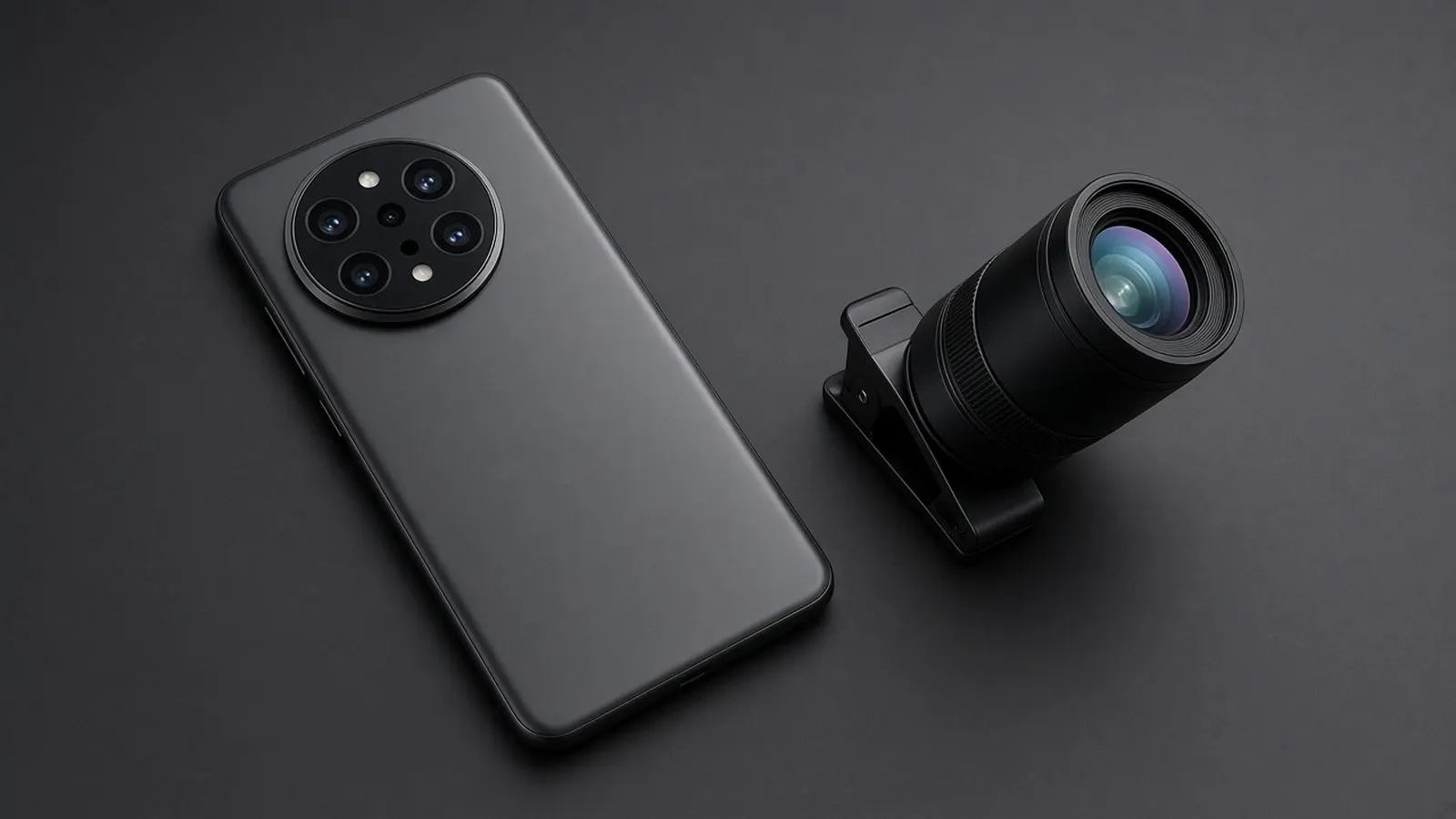
The bigger headline is the accessory. The X500 Pro Max works with the vivo ZEISS Telephoto Extender Gen 2 Ultra, rated at a 400mm equivalent. That’s optics doing the work, which is a different and usually better kind of zoom than cropping.
Do the division. 400mm over 85mm is about 4.7 times the native reach, before you crop at all. Stack a crop on top and the reach gets silly, in the way birders and concert-goers will appreciate.
There’s a catch, and it’s the usual one with add-on lenses. The extender is a separate thing to buy, carry and clip on, and the press release I’m working from doesn’t list its price. A clip-on lens also adds weight out front, so handheld shots at full stretch will lean on that stabilization.
How the three X500 models line up
vivo’s announcement gives enough to compare the telephoto setups across the series:
| Model | Telephoto (equivalent) | Telephoto sensor | Extender support | Battery (typical) |
|---|---|---|---|---|
| X500 Pro Max | 85mm, ZEISS APO | 200MP, 1/1.4-inch HP0 | 400mm Telephoto Extender Gen 2 Ultra | 7,800mAh |
| X500 Pro | 85mm, ZEISS APO | 64MP, vivo x Sony LYTIA 610 | 200mm Telephoto Extender Gen 2 | 6,510mAh |
| X500 | 72mm, ZEISS APO | Not specified in the release | Not listed | 7,500mAh |
All three run OriginOS 7, and vivo says the series has the largest batteries in X-series history. All support 90W wired and 40W wireless charging, per the release.
Look at the middle row. Same 85mm focal length as the Pro Max, a smaller 64MP sensor, and a shorter 200mm extender. If you mostly shoot at the native 85mm, the gap between Pro and Pro Max is smaller than the megapixel figures suggest. It widens the more you crop and the further you want to reach.
What “APO” is doing on the spec sheet
vivo says the telephoto cameras are certified to ZEISS APO standards for chromatic aberration control. In plain terms: fewer purple and green fringes along high-contrast edges, like branches against a bright sky. That matters more on a telephoto than on a wide lens, because fringing gets magnified along with everything else when you crop.
It’s a real optical claim. It’s also not something you can verify from a spec sheet, so treat it as a promise to check in sample photos.
What OPPO’s “200MP camera system” tells you so far
Not much yet, and that’s the point worth making. OPPO’s launch page for the Find X10 and Find X10 Pro Max says “200MP Camera System” and “Hasselblad True-to-Life Camera.” It doesn’t say which camera holds the 200MP sensor, what focal length it sits behind, or how big the sensor is.
Those three details are the ones that decide what a 200MP number is worth. A 200MP main camera and a 200MP telephoto behave very differently. Wait for the full spec sheet before comparing it to vivo’s.
The mistake people make with zoom numbers
The common mistake is reading the biggest “x” figure on the box as the phone’s zoom. Marketing often quotes a hybrid or digital maximum, which is a crop with processing on top. The number to hunt for is the focal length in millimeters of each physical lens. Everything else is derived from that.
My take: a 200MP telephoto is a genuinely useful idea, because cropping a high-resolution frame beats cropping a low-resolution one. But for real reach, the extender matters more than the megapixels. If you’d never carry a clip-on lens, the cheaper Pro model is probably the smarter buy.
If you want the broader version of this argument, our piece on camera specs versus camera results covers main cameras and processing. And because these phones carry huge batteries, our guide to battery capacity and charge cycles explains what 7,800mAh does and doesn’t promise.